

PRCXI: Your Professional PCR System Construction Workstation Supplier!
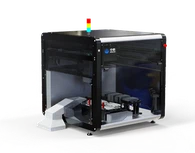
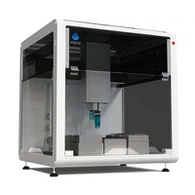
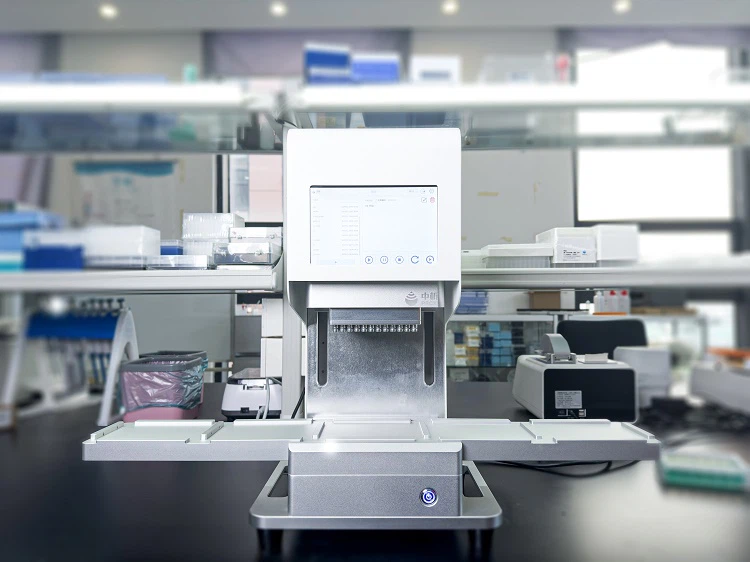
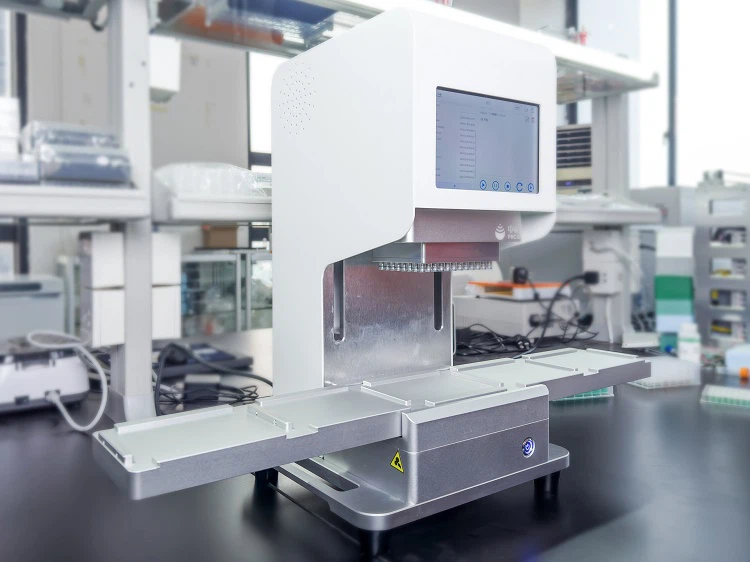
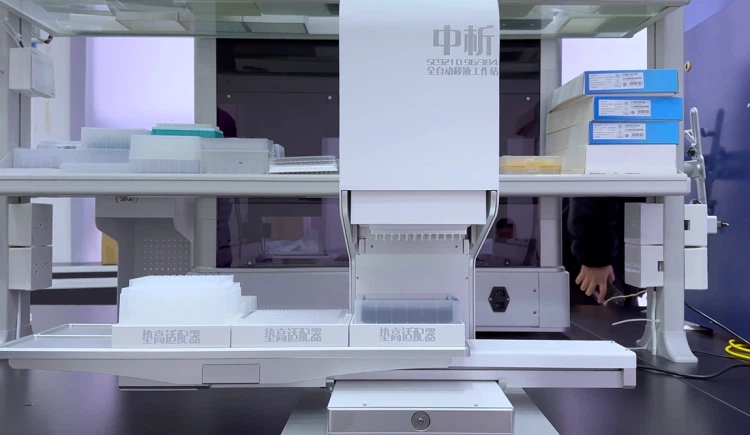
PRCXI Bioinformatics Co., Ltd. is a supplier of pipetting workstations located in Suzhou, China. Our company was established in 2014, with a 17,000-square-meter modern R&D center and a high-quality team, launched the first domestic automated pre-processing platform system with independent standards. Currently, our main products are pipetting workstations, including SC9000 manual pipetting workstation, SC9100 semi-automatic pipetting workstation and SC9320 fully automatic pipetting workstation, as well as matching magnetic stands, adapters and functional modules.
Rich Product Range
Our product lines are very rich, including high-precision micro-liquid processing platforms, fully automatic cup dispensing systems and fully automatic nucleic acid extraction systems, as well as various supporting consumables and application technologies.
Well Equipped
Our factory consists of mold processing, testing, CNC processing, sheet metal processing, assembly workshops, etc., and is equipped with advanced production equipment such as Taican precision machines, Huaqun machine tools, STAR SB20R G type, etc.
Multiple Partners
We have established friendly cooperation with a number of well-known partners in the industry, including WuXi AppTec, DIAN Diagnostics, Mgi Tech, and research institutions represented by Tsinghua University.
Quality Assurance
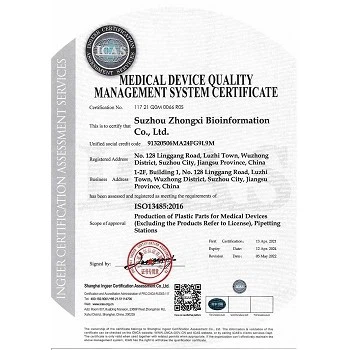
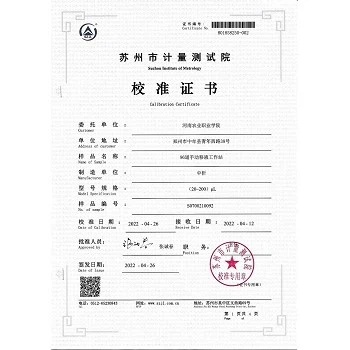
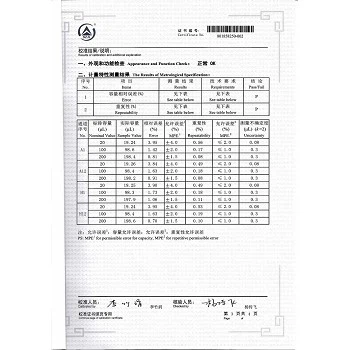
All our products undergo functional inspection and quality testing after production, and comply with ISO, CE and other standard certifications, and have multiple instrument quality testing certificates.
Our Related Products
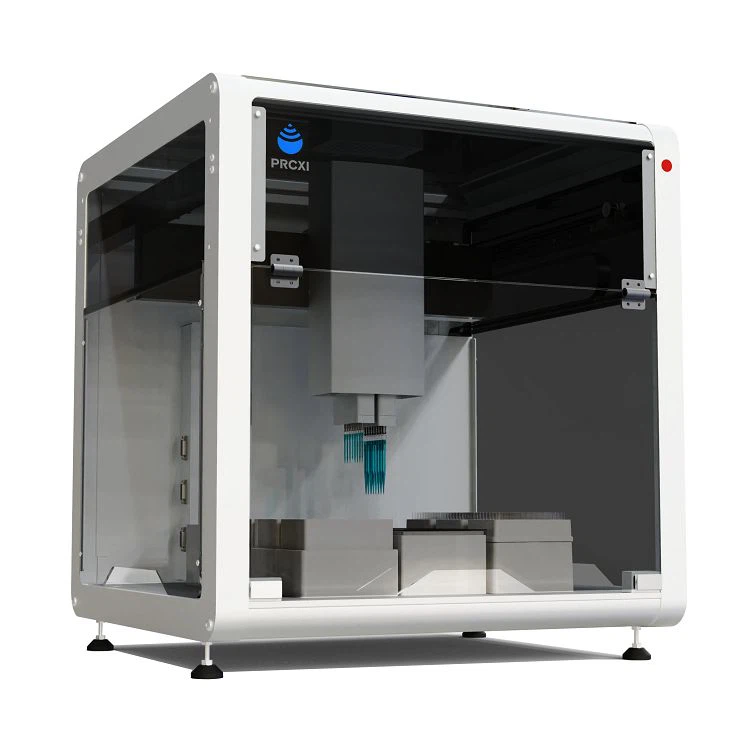
An automated pipetting system, also known as a "liquid handling robot", is a tool that speeds up the process of transporting precise volumes of liquids. A single-channel pipette is a laboratory tool that can only transfer one aliquot at a time. They are often used in laboratories with low sample throughput, such as those in research and development.

Pre Electrophoresis Loading Workstation
Pre-loading is a type of gel electrophoresis stain that occurs before running a gel. It involves adding a stain to the loading dye and mixing it with DNA. Electrophoresis is a laboratory technique used to separate DNA, RNA or protein molecules based on their size and electrical charge.

A serial dilution workstation is a tool that enables users to perform analyte pipetting in either a single row or column pattern. Serial dilution is a technique used in laboratories to estimate the concentration of a sample or to obtain the desired concentration of a reagent, chemical, or compound. It involves diluting a sample, reagent, chemical, or compound with a constant dilution factor.

A dual pipetting workstation is a laboratory tool that allows scientists to transfer a specific volume of a sample or reagent. It can be used for multiple applications within laboratories that only have a small throughput. It enables the user to quickly and easily fill multi-well plates used in tissue culture, drug screening, or enzyme assays.

Pipetting robots, also known as liquid handling robots, are machines that can transfer small amounts of liquids between containers. They can help with routine lab work, help prevent cross-contamination through automated washing procedures.
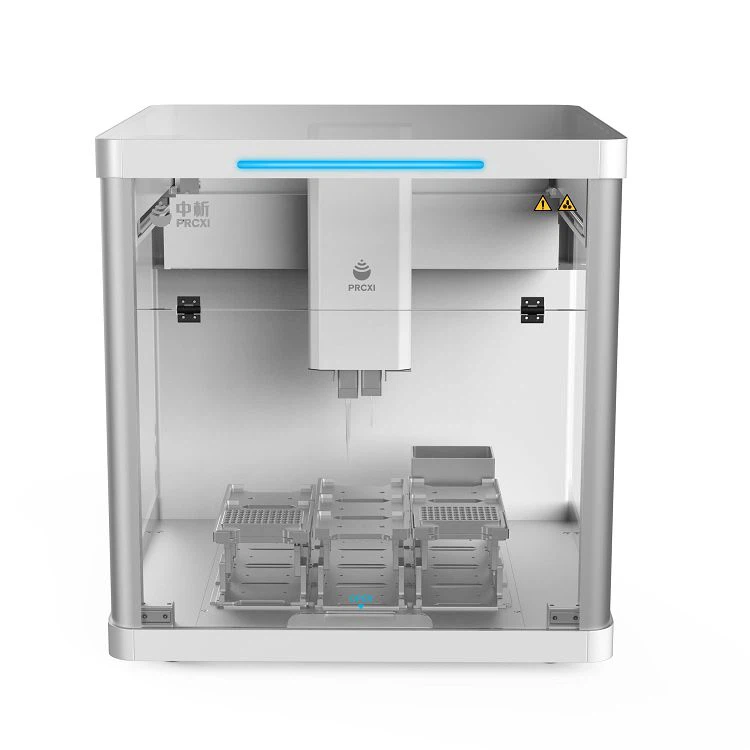
Liquid Handling Automated Workstation
An automated liquid handling workstation is a machine that uses a motorized system to mix, dispense, and aspirate liquids. It speeds up the pipetting and dispensing process while at the same time increasing the accuracy of workflows for different liquid types and volumes. By using a liquid handler, you are relieved of the extreme stress of manual handling.

Automated liquid handling equipment can come in many different shapes and sizes for use in various fields. These machines use a motorized pipette or syringe, attached to a robotic arm, to dispense a specified volume of liquid or a sample to a designated container.

Laboratory Automation Workstation
Automated pipetting systems fall under the category of liquid handling instruments, which are typically used for copying, aliquoting, pooling and mixing and the serial dilution of liquids. The automated pipetting systems are used to speed up the process of transporting small and precise volumes of liquids.
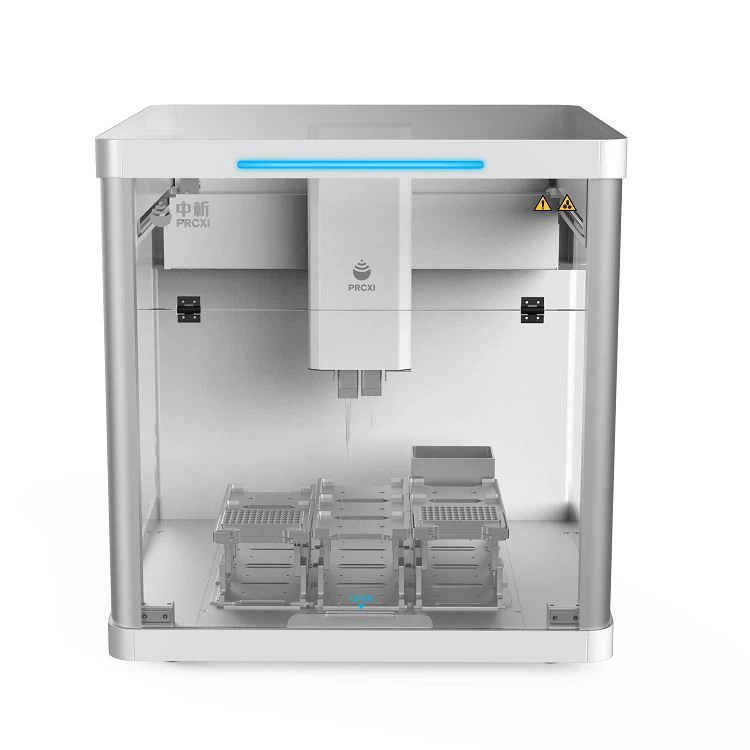
Nucleic And Extraction Workstation
A nucleic acid extraction workstation is a medical device that can perform in-vitro diagnostics. It uses mechanical, electronic, and software technologies to automate the extraction of nucleic acids. Automated systems use magnetic-bead based technology to automate the lysing, washing, and elution steps of extraction.
What is PCR System Construction Workstation?
PCR stands for Polymerase Chain Reaction, which was developed in order to amplify, or multiply, a particular section of a strand of DNA to make study of that segment easier. PCR has various applications ranging from medicine to environmental study to crime scene investigation. Because cross contamination during PCR work can produce inaccurate results, a clean environment was required. PCR workstations prevent background and cross contamination by keeping all contaminants in the air away from samples. They go by a variety of names: PCR hoods, clean benches, laminar flow hoods, and the list goes on.
Features of PCR System Construction Workstation
Efficient Cleaning
Our PCR workstations feature HEPA filters that quickly provide dual purification by inactivating membranes in the air and on surfaces to prevent growth, bacteria and mold, providing a clean environment for PCR setups and other sensitive protocols.
User Friendly
Our PCR workstations are equipped with UV air recirculation, which regulates laminar airflow to prevent reagent contamination. At the same time, they display the running time of the tube bundle and filter on the screen for timely replacement to maintain constant tube bundle strength.
Flexible Shelves
The device's sensor-operated shelves provide additional storage space for reaction tubes, pipettes or racks above the rear. These partitions can also host benchtop equipment, allowing multiple work steps to be combined without changing position to reduce the risk of cross-contamination.
Good Compatibility
Our PCR workstations are also equipped with multiple internal power adapters and are compatible with laboratory equipment such as mini centrifuges or vortex mixers, allowing the combination of multiple work steps without interrupting the workflow.
Application of PCR System Construction Workstation

PCR workstations are designed to control air circulation to reduce the chances of cross-contamination that can cause inaccurate results. Features that be included on PCR workstations are:
● A sterile work area for aseptic techniques
● A high-efficiency fan powered by an electronically commutated (EC) motor
● Energy-saving LED lighting Vertical laminar airflow with multiplex HEPA filtration technology
● UV lights for sterilization
There are multiple uses of a PCR workstation as listed below:
● The modification of DNA fragments
● The amplification of gene fragments as an alternative to cloning
● DNA assessment of archeological specimens
● The sensitive identification of pathogenic microorganisms
● The detection of mutations pertaining to inherited diseases, tissue typing, or malignant transformation
● The evaluation of genetic markers for crime scenes and forensic applications
● The study of gene expression
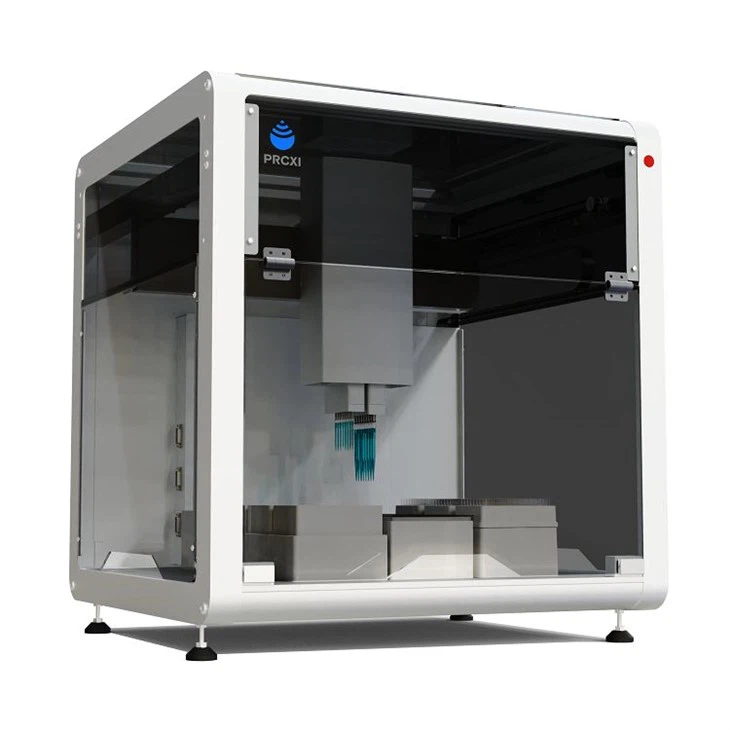
What are the Common PCR?
Multiplex PCR
Multiplex PCR employs different primer pairs in the same reaction for simultaneous amplification of multiple targets. Compared with standard PCR systems using only 2 primers, an additional challenge of multiplex PCR is the varying hybridization kinetics of different primer pairs. Primers that bind with high efficiency could utilize more of the PCR reaction components, thereby reducing the yield of other PCR products. This often results in unamplified DNA sequences and absence of expected PCR products.
Long-range PCR
PCR products of up to 4 kb can be routinely amplified using standard PCR protocols using Taq DNA polymerase. However, amplification of PCR products longer than 4 kb often fails without lengthy optimization. Preventing DNA damage, such as DNA depurination, is of particular importance for amplification of long PCR products, as a single DNA lesion within the template is sufficient to stall the PCR enzyme. DNA damage during PCR cycling can be minimized with specific buffering substances that stabilize the pH of the reaction.
Single-cell PCR
Single-cell PCR provides a valuable tool for genetic characterization using a limited amount of starting material. By flow cytometry or micromanipulation, individual cells of interest can be isolated based on cell-surface markers or physical appearance. Amplification of low-abundance template molecules - which can be as low as one or two gene copies - requires a PCR system that is highly efficient, specific, and sensitive.
Methylation-specific PCR (MSP)
MSP enables the methylation status of target DNA to be determined after sodium bisulfite treatment. The method requires two sets of primers to be designed: one set that anneals to unchanged cytosines (i.e., methylated in the genomic DNA) and one set that anneals to uracil resulting from bisulfite treatment of cytosines not methlyated in the genomic DNA. Amplification products derived from the primer set for unchanged sequences indicates the cytosines were methylated and thus protected from alteration.
Types of PCR System Workstation
There are two types of PCR workstations as listed below:
Laminar Flow
Laminar flow, which constantly filters and circulates air and moves it smoothly in parallel layers. This PCR workspace type circulates and filters air constantly in parallel layers. Using the HEPA filtration technique, a PCR Laminar Flow Cabinet combines a clean air environment with timed UV light sterilization for maximum protection from sample contamination. If you raise the bi-fold sash, it will turn off the UV light and enables the blower.
Dead Air
The dead Air PCR workstation promotes circulation-free air. Dead Air PCR workstation unit comes with a UV-light timer that allows sterilization between amplifications. The presence of a safety interlock switch prevents exposure to UV light when you raise the sash. Laminar flow cabinets employ HEPA air filtration and UV light sterilization for maximum protection against contamination. The air velocity in a laminar flow cabinet should be between 0.3 m/s and 0.5 m/s, with 240 to 360 air changes every hour.
Difference Between PCR vs. Rapid COVID-19 Test
There are two types of COVID-19 tests: the polymerase chain reaction (PCR) test and the antigen test, known as the rapid test.
PCR Test
● How it works
The PCR test takes a sample of ribonucleic acid (RNA) and "amplifies" it with the help of lab technologies. Amplifying RNA helps to make even small traces of the COVID-19 virus visible in the test sample. Even if you have a small trace of the virus in your system, the PCR test will detect it.
● Benefits
PCR tests are more reliable and accurate due to testing the specific genetic material of the virus, eliminating the interference from other viruses.
● Drawbacks
While a PCR test is the preferred method of detecting COVID-19, it must be done by a health care provider. These tests don't produce immediate results, which means you may be waiting a few days to know if you're positive or negative.
Antigen Test
● How it works
The rapid test, called an antigen test, checks for proteins that are found on the outside of the virus. The antigen test mimics what antibodies do. Antibodies are the "good guys" that attach to the antigen protein (the "bad guys") and fight the virus. When you give your nasal swab sample, it's put into a liquid and then onto a test strip.
● Benefits
Results in about 15 minutes.
Easy enough to do on your own at home. There's always a little room for user error, but as long as you closely follow the directions, anyone can test themselves with an antigen test.
Helps slow the spread of contagious viruses like COVID-19 with quicker results
● Drawbacks
Unlike the PCR test, the antigen test can only determine if you have an active virus in your body. The rapid test can't detect small amounts of the virus or asymptomatic cases as accurately as the PCR test can.
Factors to Consider When Choose PCR System Construction Workstation
PCR workstations are durable equipment that will be in your laboratory for a long time. That's why making the best choice when choosing which workstation to purchase is essential. The following are factors you should consider:
What Type of Workstation Do You Need?
PCR workstations come in two types:
● UV workstations
● UV + HEPA workstations
Both types of workstations use UV germicidal lamps to help ensure that your workstation is free of contamination that could have come from previous samples or humans. The difference is that some workstations come equipped with particulate air HEPA filters to filter air before it enters the work chamber. That lets users create a positive pressure environment that helps keep samples free from contamination.
How Does Positive Pressure Affect a PCR Workstation?
Positive pressure means the air pressure inside your workstation is greater than outside its chamber. That means air can only flow out of the chamber, and that air from the outside environment-which could contain particulates or contaminants-cannot flow into the workstation. At the same time, filtered air inside the workstation chamber is blown out, carrying any contaminants.
To maintain positive pressure, workstations must have HEPA filtration, airtight seals, and a fan that helps operators maintain air pressure inside the unit whenever the workstation is used.
How Does Dead Air Impact PCR Results?
PCR workstations that do not have HEPA filters or fans use dead or still air. That means the air inside the workstation remains stationary inside the chamber. There is no air movement inside the workstation, and no air is blown into or out of the workstation. That minimizes disturbances to the samples inside the chamber, prevents contamination and keeps products sterile.
Because there is no ventilation system, air chambers may still be unable to maintain uniform temperatures throughout the work chamber. Different areas of the chamber could have slight temperature variations. Temperatures could vary by layer inside the chamber. While the differences would be small, they could significantly impact PCR results.
PCR Reduce the Cost of Time and Money
PCR workstations are an common environment for manipulating DNA and RNA and setting up PCR assays. They help guard against contamination that can lead to false or misleading results, which can cost time and money.
In short, workstations minimize the risk of contamination by providing "separate rooms" for PCR reactions. They offer controlled environments for PCR and RNA applications that protect your samples and help you achieve optimal results.
● Do not use PCR work stations to process biohazard samples. PCR work stations only protect samples inside the work zone from external airborne contamination. They do not protect the operator.
● Allow the purge cycles. Leave the blower on for at least 3 minutes before and after use to purge the work zone of any contaminants.
● Only arms and hands are allowed inside the work zone. Operators must always bear in mind that head and shoulders should not be inside the work zone and doing so might potentially contaminate the samples.
● Do not spray anything on the back wall. This can damage the HEPA/ULPA filter and cause leakage.
● Do not place your body parts directly above sensitive samples. This may be a possible cause of product contamination.
● Do not store your stuff inside thework station. Overloading thework station with unnecessary items can affect thework station's airflow and containment.
● Only sterile materials should be placed inside the clean work area. Make sure that all your items are disinfected properly to avoid possible contamination of the work bench.
● Identify the proper location for thework station. External airflow disturbances (doors, excessive human traffic, windows, diffusers, air conditioner outlets) can compromise containment. Minimize disturbances to the airflow barrier.
● Do not use the Bunsen burner inside thework station. The resulting buoyancy effect will affect thework station's airflow and containment. When necessary, low pilot light type electric burners may be used.
● Wear Personal Protective Equipment (PPE) properly. Wearing a back-fastened lab coat (to protect the operator from splashes) as well as double gloving (over the cuffs) should be practiced.
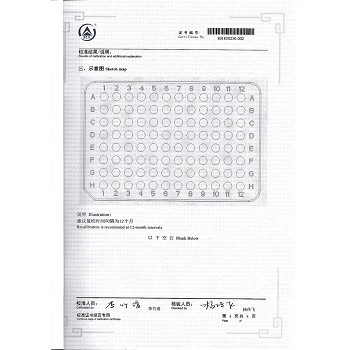
Certificate Photo
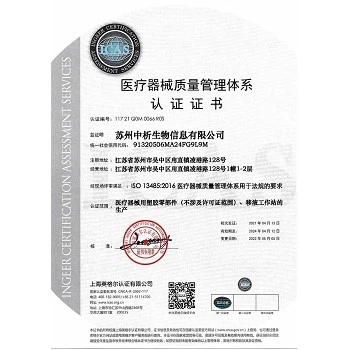
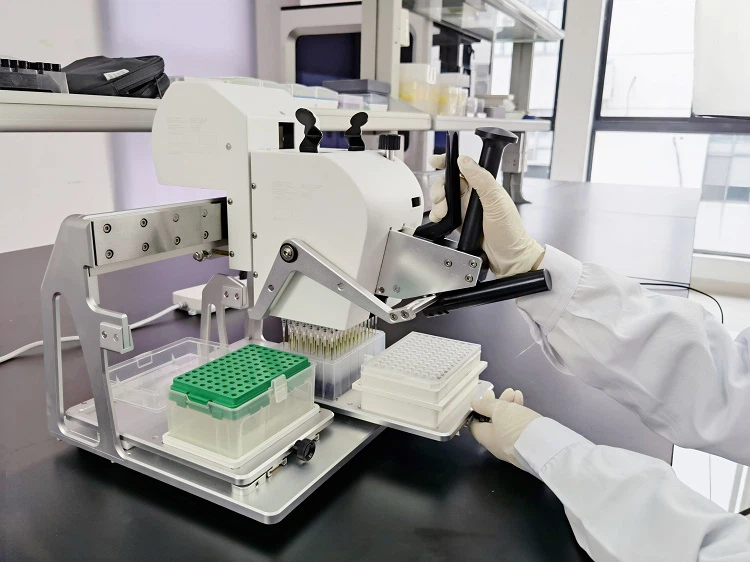
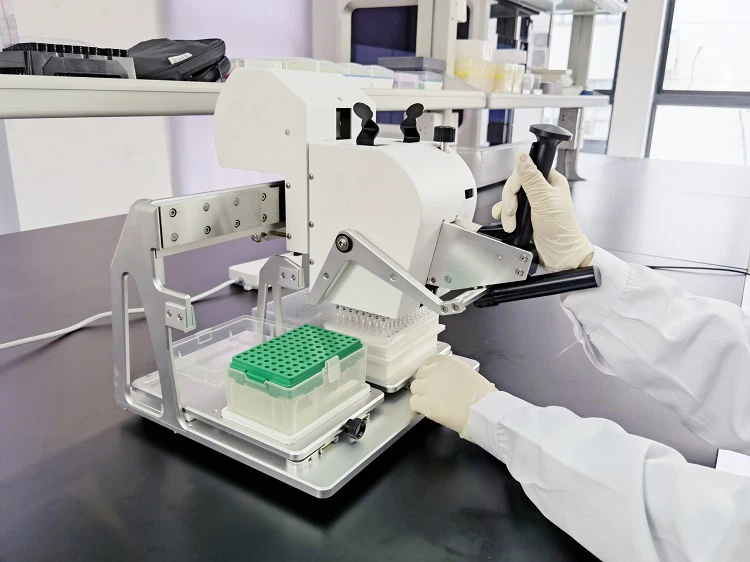
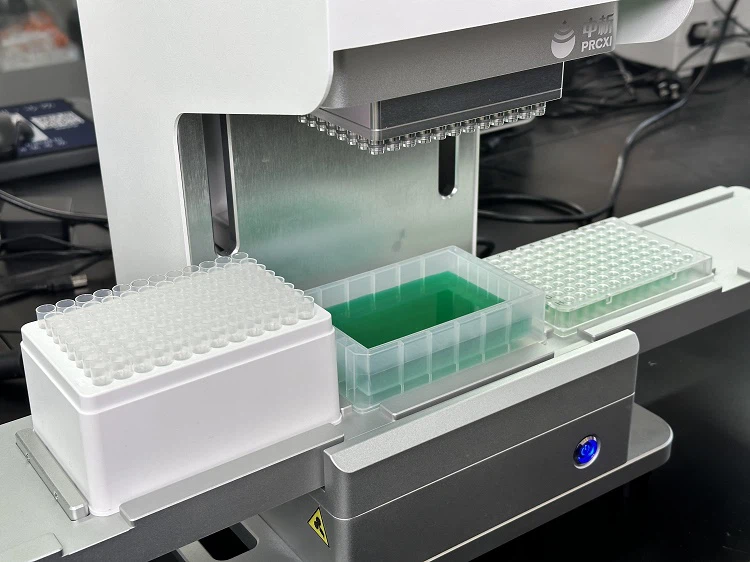
Factory Photo



Frequently Asked Questions of PCR System Construction Workstation
Hot Tags: laboratory automation workstation, China laboratory automation workstation manufacturers, High Throughput Pipetting Workstation, 96 Channel Semi Automatic Workstation, Counter Automatic Pipetting Workstation, Pre Electrophoresis Loading Workstation, Laboratory Automation Workstation, PCR Or QPCR Manual Workstation