

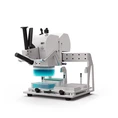


PRCXI: Your Professional Table Pipetting Robot Supplier!
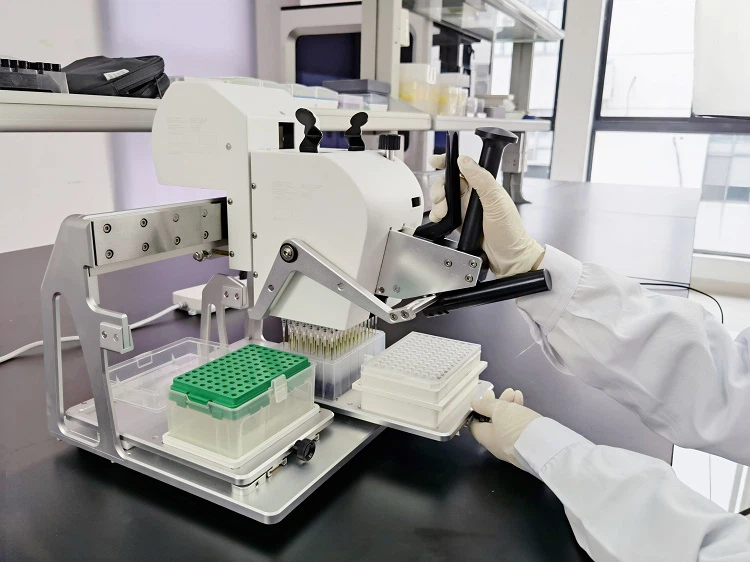
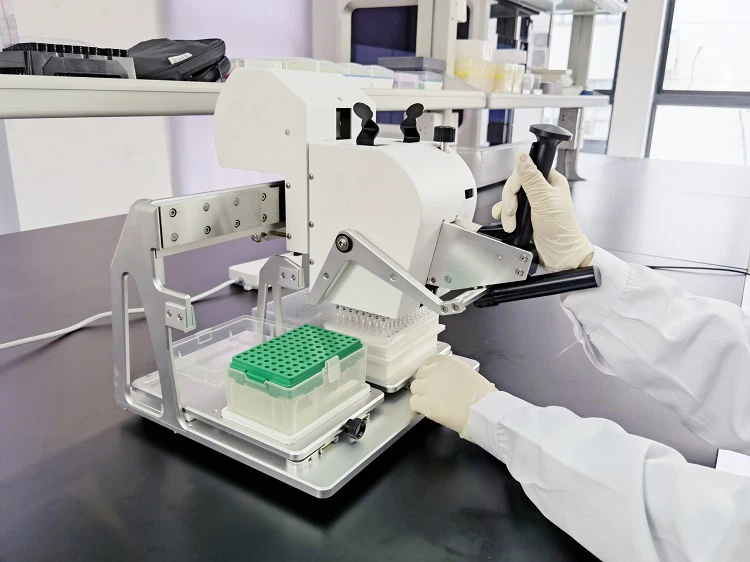
PRCXI Bioinformatics Co., Ltd. is a supplier of pipetting workstations located in Suzhou, China. Our company was established in 2014, with a 17,000-square-meter modern R&D center and a high-quality team, launched the first domestic automated pre-processing platform system with independent standards. Currently, our main products are pipetting workstations, including SC9000 manual pipetting workstation, SC9100 semi-automatic pipetting workstation and SC9320 fully automatic pipetting workstation, as well as matching magnetic stands, adapters and functional modules.
Rich Product Range
Our product lines are very rich, including high-precision micro-liquid processing platforms, fully automatic cup dispensing systems and fully automatic nucleic acid extraction systems, as well as various supporting consumables and application technologies.
Well Equipped
Our factory consists of mold processing, testing, CNC processing, sheet metal processing, assembly workshops, etc., and is equipped with advanced production equipment such as Taican precision machines, Huaqun machine tools, STAR SB20R G type, etc.
Multiple Partners
We have established friendly cooperation with a number of well-known partners in the industry, including WuXi AppTec, DIAN Diagnostics, Mgi Tech, and research institutions represented by Tsinghua University.
Quality Assurance
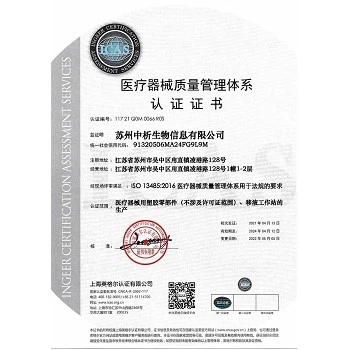
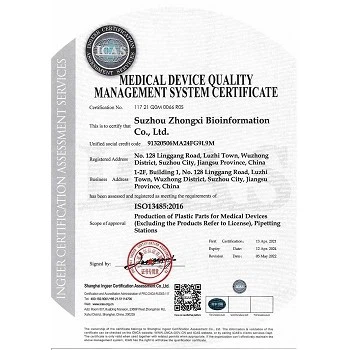
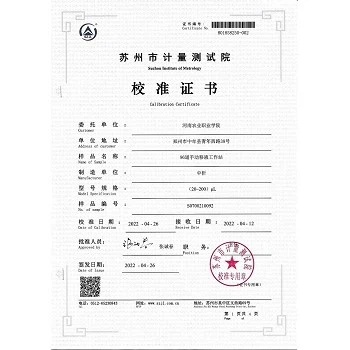
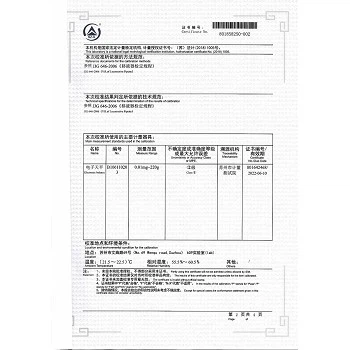
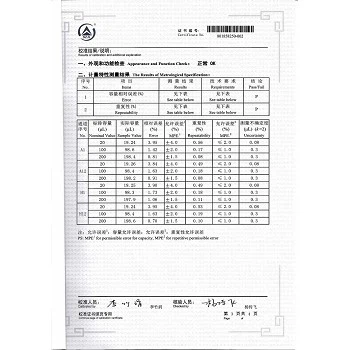
All our products undergo functional inspection and quality testing after production, and comply with ISO, CE and other standard certifications, and have multiple instrument quality testing certificates.
Our Related Products

An automated ELISA workstation is an instrument that automates manual procedures in an enzyme-linked immunosorbent assay (ELISA). ELISA is an immunological assay that measures proteins, antigens, glycoproteins, and antibodies in biological samples.

Often called 'liquid handling robots', automated pipetting systems are used to speed up the process of transporting small and precise volumes of liquids. The workstations can do much of the sampling, mixing, and combining of liquid samples automatically.

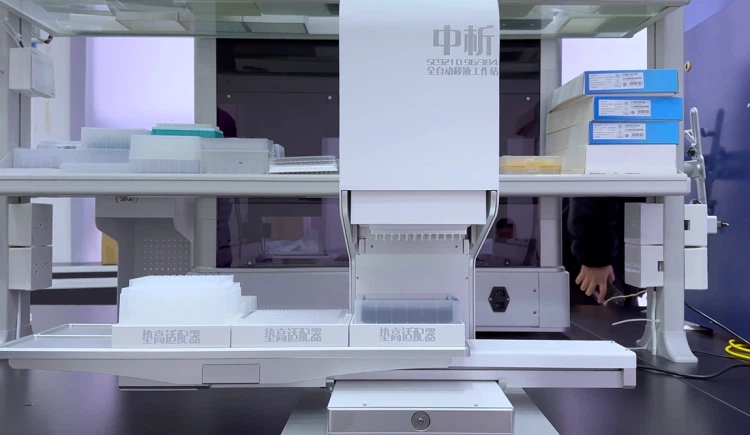
96 Channel And 12 Plates Workstation
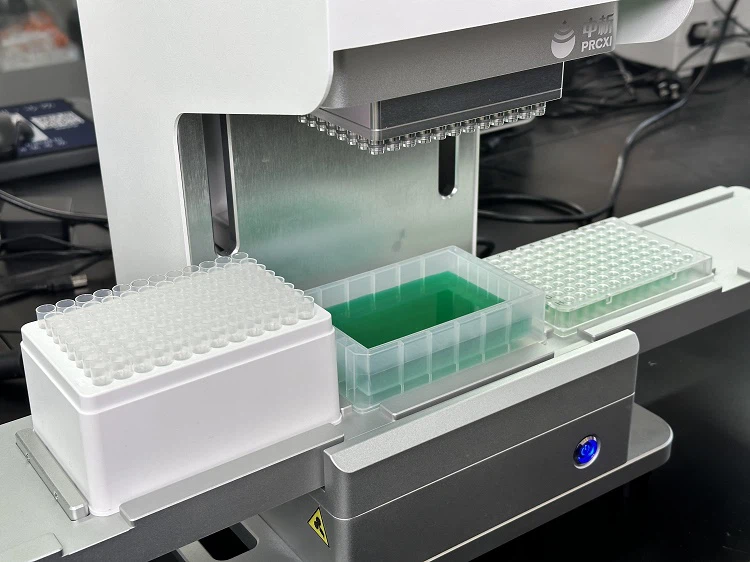
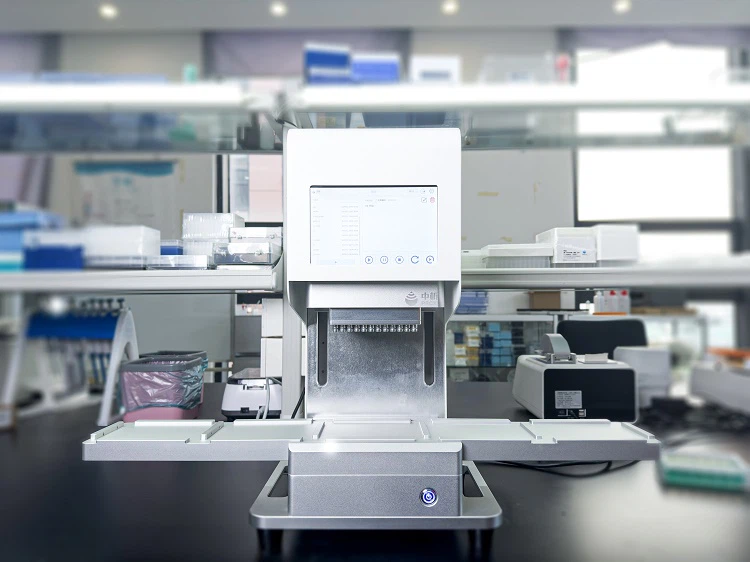
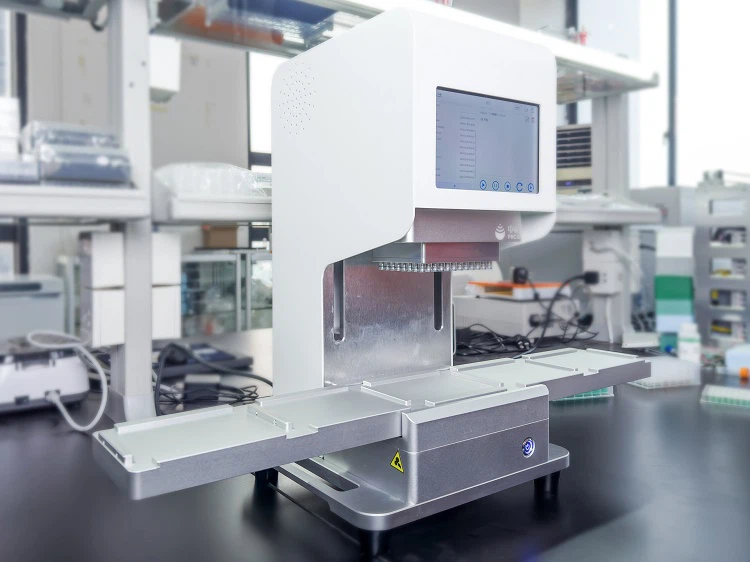
This workstation can perform 96-channel pipetting, and can accept 96/384 well microplates, PCR plates, and reservoirs. It also has a touch-screen tablet for programming and operation, and a 12-position motorized platform.

Liquid handling encompasses the movement of liquid reagents via the diverse range of large scale robotic platforms to hand held single channel pipettes. An automated liquid handling workstation uses a motorized system to control liquid dispensing, aspiration, and mixing. These machines operate with higher precision and accuracy than manual pipetting.

Single Row Or Single Row Gradient Diltution Workstation
The Gradient Diluter is a device that uses dispersion to make dilutions. It can extend the dilution range of practical serial dilutions to six orders of magnitude in final volumes as low as 10 μL. It can be used to set up conditions for drug screening or characterizing IC50 values of drugs.

Cell growing workstations are essential lab equipment used in medical and industrial applications that involve growing human or animal tissue. Workstations control critical factors for cell growth, such as temperature, humidity, oxygen, carbon dioxide. They are used by biotechnology researchers and pharmaceutical firms.

Compound Addition Workstaitons
There are multiple matches for Compound Addition Workstations, including a workstation for compound addition and a workstation for compound words. It can be an automated liquid handling workstation that can perform compound addition, reagent addition, and PCR/qPCR setup.

High Throughput Pipetting Workstation
A high throughput pipetting workstation is a liquid handling instrument that can automate manual tasks. They are used in scientific research, especially in drug discovery and development, where a single test can require thousands of samples.

Small Automatic Pipetting Workstation
A small automatic pipetting workstation is a liquid handling instrument that uses a motorized system to transfer liquids. Automated pipetting systems, also known as liquid handling robots, can perform a variety of tasks, to speed up the process of pipetting and dispensing liquid, while at the same time increasing the accuracy of workflows.
What is Table Pipetting Robot?
Pipetting technique is a term that is used to refer to the full scope of a user's interactions with a pipette as they conduct their experiments. A table pipetting robot, also known as a liquid handling robot, is a machine that transfers liquids between containers. These robots are designed to speed up and increase the accuracy of the process of pipetting and dispensing liquids. They enable the user to rapidly fill and release the pipette, using squeezable bulbs, buttons or thumb wheels. They may be mechanical but are more commonly battery operated.
Features of Table Pipetting Robot
Wide Compatibility
These pipetting robots can freely dispense workstations in ANSI/SLAS format, including PCR tubes and strips, microcentrifuge tubes, reservoirs, and 96 or 384-well plates. And their liquid ends are available in single-channel sizes and 8-channel versions for non-contact fluid transfer.
Multi Function
These liquid handling workstations feature independently adjustable pipetting distances and pipetting volumes. They are compatible with all types of samples, reagents, consumables, and modules, and can be freely configured and integrated according to different application scenarios.
Remote Operation
Our tabletop pipetting robots feature remote control and are capable of unattended operation of standard adjustable volume pipettes, including Rainin pipettes from 0.1 µL to 1000 µL.
Easy to Integrate
They have special and powerful robotic arm expansion capabilities that support simultaneous plate processing and pipetting, and can connect and integrate multiple devices to meet complex laboratory automated pipetting needs.
Different Method of Pipetting
Each method has its strengths and limitations, and the choice depends on factors such as the volume range and liquid characteristics required for your lab's workflows.
Air Displacement Pipetting
Air displacement pipetting is a commonly used method that relies on creating an air cushion to transfer liquids. In this method, a pipette aspirates the liquid by creating a vacuum within the pipette tip. When dispensing, the air pressure is released, allowing the liquid to be expelled. Air displacement pipetting is suitable for a wide range of volumes, from microliters to milliliters. It offers versatility and is compatible with various liquid types. However, it may not be suitable for volatile or viscous liquids, as they can disrupt the air cushion and affect accuracy.
Positive Displacement Pipetting
Positive displacement pipetting involves direct contact between the liquid and a disposable piston or tip. As the piston moves, it physically displaces the liquid, ensuring precise and repeatable delivery. This method is particularly useful for transferring viscous or volatile liquids, as it eliminates the air cushion and minimizes the risk of contamination. Positive displacement pipetting is often preferred for low-volume applications, such as handling microliter volumes. However, it may require specialized tips and is not suitable for transferring large volumes due to the limitations of the disposable piston or tip.
Non-contact Method
Non-contact dispensing method is a relatively newer method used for transferring small droplets of liquid. It utilizes pressure pulses or sound waves to generate pressure waves that eject tiny droplets from a source onto a target. Non-contact liquid handling systems can precisely control the volume of each droplet by adjusting the frequency and intensity of the pressure or sound waves. This method is particularly advantageous for high-throughput applications where precise nanoliter or picoliter volumes are required. Non-contact method offers contactless dispensing, reducing the risk of cross-contamination and sample carryover. Although non-contact dispensing can reduce pipette tip consumption overall, it is not relevant for steps that require aspiration of many source liquids such as plate replications or bead-based clean-ups.
Benefits of Table Pipetting Robot
Pipetting robots will not replace human beings in the laboratory, at least not any time soon. Many lab tasks require people, including tending to a robotic pipetting solution. Setting up the machine, loading samples, operating the controls, and analyzing the results are all done by laboratory technicians.
Reduce Injuries
According to an article published by the University of Pittsburgh, studies have found a significant increase in the risk of hand and shoulder repetitive-strain injuries when laboratory workers pipette for more than 300 hours per year. That works out to be an average of only two hours of pipetting per day. Many laboratory workers perform pipetting operations far more often than that.
Minimize Errors
Proper and consistent technique is crucial to achieving accuracy in pipetting. It is easy to make mistakes when fatigued, and it is difficult for a person to repeat the same action with great precision. Using robotics, test results with excellent accuracy and repeatability can be attained. Fatigue is no longer a problem.
According to an article in Rapid Microbiology, as much as half of all research funding in life sciences is used to repeat experiments. This is primarily caused by an inability to reproduce test results. This irreproducibility has, in turn, been caused by an incorrect execution in liquid-handling workflows.
Improve Traceability
Traceability means being able to trace something back to its source to verify every step of the production and distribution process. Among other things, it involves recording the step-by-step actions taken by a lab technician. The operator identity, technique, and a variety of additional data also need to be captured. Even with modern computers, this record-keeping can be burdensome. Pipetting robotic systems automate the gathering of much of the required data. As a result, the automated systems produce excellent traceability while significantly reducing manual data entry.
Improve Productivity
The COVID pandemic created a tremendous increase in the number of laboratory tests needed. The vast and sudden rise in testing volume stretched many labs to their capacity and beyond. Sample preparation is the bottleneck of experiments for many research and clinical laboratories today. Many laboratories are considering automation to address this issue. Case studies show that implementing pipetting robots results in an enormous increase in productivity. In one example, hands-on time was reduced from 2 hours 15 minutes to 20 minutes in handling a batch of eight test samples. That is a reduction of almost seven to one.
Enhancing Safety
Most labs operate safely without robotics. Yet, implementing robotic pipetting adds another layer of safety. Lab technicians are more isolated from the samples when using robotics. Especially in the COVID era, extra safety is a good idea.
Common Pipetting Techniques of Table Pipetting Robot


Forward Pipetting Technique
Press the operating button to the first stop.
Dip the tip into the solution to a depth of 1 cm, and slowly release the operating button. Wait 1-2 seconds and withdraw the tip from the liquid, touching it against the edge of the reservoir to remove excess liquid.
Dispense the liquid into the receiving vessel by gently pressing the operating button to the first stop and then press the operating button to the second stop. This action will empty the tip. Remove the tip from the vessel, sliding it up the wall of the vessel.
Release the operating button to the ready position.
Reverse Pipetting Technique
The reverse technique is used for pipetting solutions with a high viscosity or a tendency to foam. Reverse pipetting is only possible with air displacement pipettes
Press the operating button to the second stop.
Dip the tip into the solution to a depth of 1 cm, and slowly release the operating button. This action will fill the tip with a volume that is larger than the set volume. Wait 1-2 seconds and withdraw the tip from the liquid, touching it against the edge of the reservoir to remove excess liquid.
Dispense the liquid into the receiving vessel by pressing the operating button gently and steadily to the first stop. This volume is equal to the set volume. Hold the button in this position. Some liquid will remain in the tip, and this should not be dispensed.
The liquid remaining in the tip can be pipetted back into the original solution or disposed together with the tip.
Release the operating button to the ready position.
Repetitive Pipetting Technique
This technique is intended for repeated pipetting of the same volume. Can only be used with electronic and repeator pipettes.
Press the operating button to the second stop.
Dip the tip into the solution to a depth of 1 cm, and slowly release the operating button. Withdraw the tip from the liquid, touching it against the edge of the reservoir to remove excess liquid.
Dispense the liquid into the receiving vessel by gently pressing the operating button to the first stop. Hold the button in this position. Some liquid will remain in the tip, and this should not be dispensed.
Continue pipetting by repeating steps 2 and 3.
Pipetting Whole Blood
Use forward technique steps 1 and 2 to fill the tip with blood (do not pre-rinse the tip). Wipe the tip carefully with a dry clean cloth.
Dip the tip into the blood and press the operating button to the first stop. Make sure the tip is sufficiently below the surface.
Release the operating button slowly to the ready position. This action will fill the tip with blood. Do not remove the tip from the solution.
Press the operating button to the first stop and release slowly. Repeat this process until the interior wall of the tip is clear.
Press the operating button to the second stop and completely empty the tip. Remove the tip by sliding it along the wall of the vessel.
Release the operating button to the ready position.
Here are tips on buying a liquid handling robot, that will hopefully make the process a little bit easier for you.
Make a List of Your Pipetting Applications in Your Lab
We recommend creating a list of the various applications of your liquid handling in your lab. Now this would serve as a checklist of tasks that are required for the robot to perform. If the robot you liked so far does not automate some of the processes on the list, think how important that task is for you and your research. If you can live without it being automated, great, if not move on there is really a lot of robots available on the automated pipetting market.
Watch Out for all the Hidden Costs
There is a great variety of liquid handlers available right now. When you look at price, however, remember to take into account what are the side costs of using the robot. Namely, some liquid handling systems are working only with components of the same producer. You've probably already guessed it; these are usually very overpriced in comparison to the alternatives on the market. In a situation like this you might be buying a cheaper robot, but as you start using it you realize components cost so much that it becomes too expensive to use the robot on a regular basis. Of course, if you are not planning on using the pipetting robot very often, you might be okay with overpaying for components.
It all depends on your plans and needs regarding the robot. Another checklist of what components and pipette tips you are already using can be a good idea.
Plan How Crucial Will It Be to Your Work Processes
A rule of thumb would be, the more crucial it is, the more reliable it has to be. If you came across technical issues how costly would it be to temporarily switch to manual pipetting or stop the workflow. That being said, it is always more favorable for a robot to not create technical problems in the first place. Lastly, what does the procedure look like for getting help in solving the technical issues.
Automated Liquid-Handler – Enormous Help or a Waste of Time and Nerve
Although automated liquid handling solutions are becoming more and more oriented around their consumers, user-friendliness is still a huge aspect to look out for. Even if your lab already introduced a lot of automation, always make sure that the robot you are considering buying will not create problems for its everyday users. After all your return on investment depends on how much the robot will help you and save you time and money.
Reviews, Reviews, Reviews
Can't put too much pressure on this aspect. Always try and look for testimonials of past users of the given fluid handling robot. When it comes to buying products that are very interactive with the user it is crucial to read what past users have thought of the product. After all, why would you take the risk of trying the liquid handler yourself if somebody else already did it for you? Exactly there is no point, so if there are testimonials available read them and take into consideration.
Do Not Rush Your Decision
This tip seems obvious but, it is easier said, than done. When choosing a pipetting robot, it is of utmost importance to spend a lot of time on research and process of selecting the best liquid handler for your lab. Do not ever go and buy the first product, that comes in your hands. List the robots you consider buying and compare them together, read their testimonials and then select what is the best option for you.
Reach Out to Learn More
When you've just reached a point where you find it daunting anyway to find the right system for your lab, then reach out to the manufacturer of the robot. In fact, there is no rule here. Whether you've researched the entire Google Display Network for liquid handling robots, or you've stumbled upon only two liquid handlers, you can always contact the manufacturer. There are no dumb questions and there are never too many questions.
Finding the right liquid handler for you and your team is important and it can take time and effort. Thus, you should request whatever information is needed for you to make the right decision.
Certificate Photo
Factory Photo



Frequently Asked Questions of Table Pipetting Robot
Hot Tags: automated workstation, China automated workstation manufacturers, High Throughput Drug Screening Workstation, 384 Channel Workstation, Manual Or Semi Automatic Pipetting Workstation, Test for Coronavirus Workstation, PRCXI Pipetting Workstation, Pre Electrophoresis Loading Workstation


