

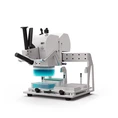


PRCXI: Your Professional Liquid Handler Workstations Supplier!
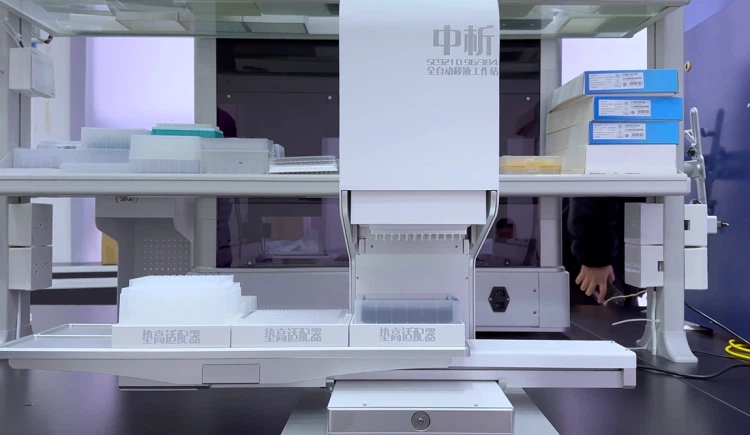
PRCXI Bioinformatics Co., Ltd. is a supplier of pipetting workstations located in Suzhou, China. Our company was established in 2014, with a 17,000-square-meter modern R&D center and a high-quality team, launched the first domestic automated pre-processing platform system with independent standards. Currently, our main products are pipetting workstations, including SC9000 manual pipetting workstation, SC9100 semi-automatic pipetting workstation and SC9320 fully automatic pipetting workstation, as well as matching magnetic stands, adapters and functional modules.
Rich Product Range
Our product lines are very rich, including high-precision micro-liquid processing platforms, fully automatic cup dispensing systems and fully automatic nucleic acid extraction systems, as well as various supporting consumables and application technologies.
Well Equipped
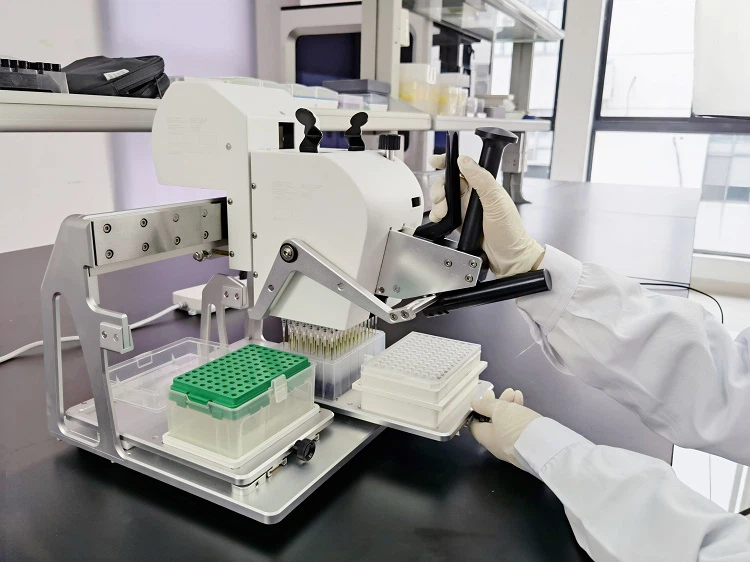
Our factory consists of mold processing, testing, CNC processing, sheet metal processing, assembly workshops, etc., and is equipped with advanced production equipment such as Taican precision machines, Huaqun machine tools, STAR SB20R G type, etc.
Multiple Partners
We have established friendly cooperation with a number of well-known partners in the industry, including WuXi AppTec, DIAN Diagnostics, Mgi Tech, and research institutions represented by Tsinghua University.
Quality Assurance
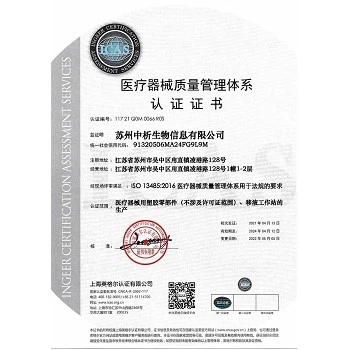
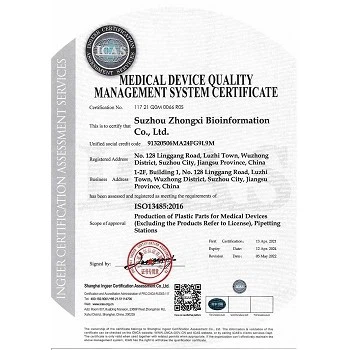
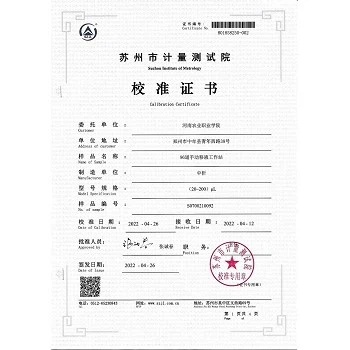
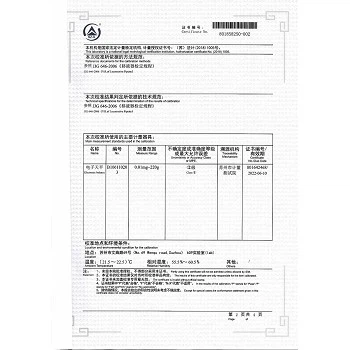
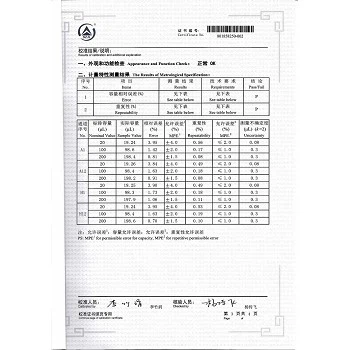
All our products undergo functional inspection and quality testing after production, and comply with ISO, CE and other standard certifications, and have multiple instrument quality testing certificates.
Our Related Products

Cell Analysis Manual Workstation
Cell analysis is a broad range of assays that study the function and localization of proteins in living and fixed cells. It can also be used to evaluate and measure cell number, cell state, cell health and viability, proliferation, and chemical and cell-mediated toxicity.

ELISA (enzyme-linked immunosorbent assay) is a popular quantitative assay to detect and quantify a range of peptides and proteins. But manual ELISA may be very time-consuming – requiring you to perform multiple pipetting steps, washing, incubating, and reading.

PCR Or QPCR Manual Workstation
A PCR workstation, also known as a PCR hood, is a dedicated space in a lab for conducting polymerase chain reactions (PCR). PCR workstations are designed to reduce the chances of cross-contamination that can cause inaccurate results.

A pipetting workstation is a benchtop liquid handling system that allows users to pipette into 96- and 384-well plates. They can be used for copying, pooling, mixing, and serial dilution of liquids. Liquid handling machines that take up little benchtop space, such as an automated pipette machine, transfer liquids between containers without needing users to monitor the operation.

96 Microplate Pipetting Workstation
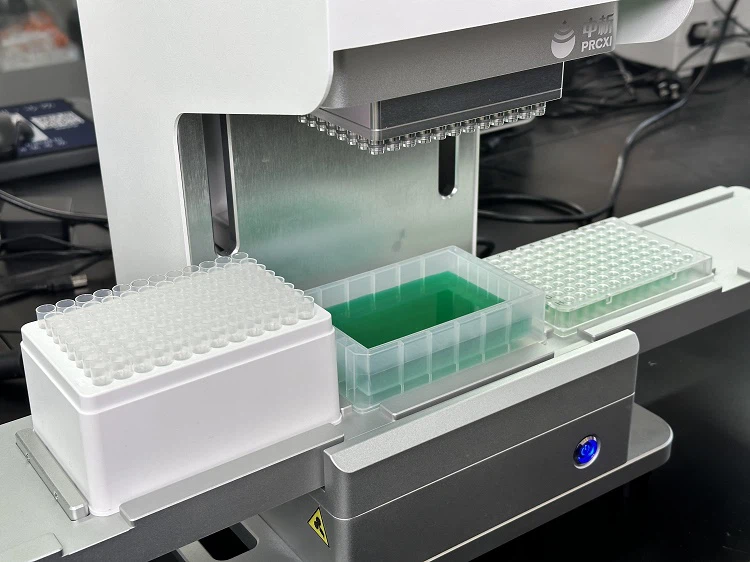
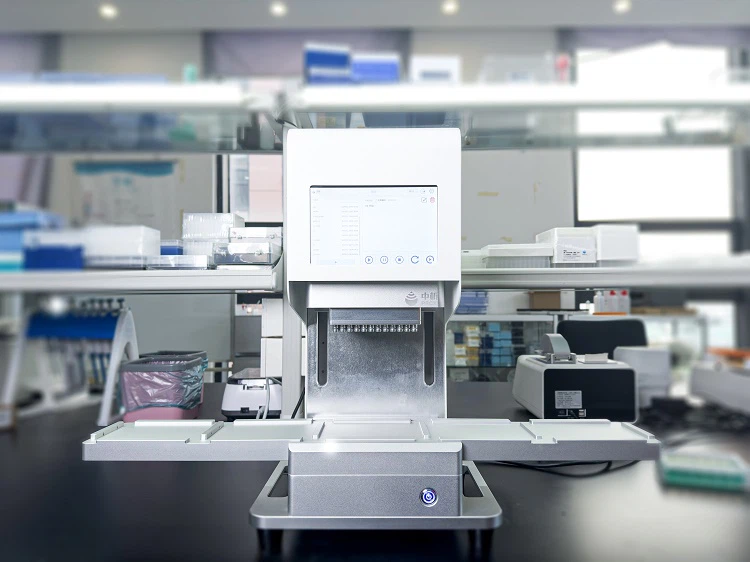
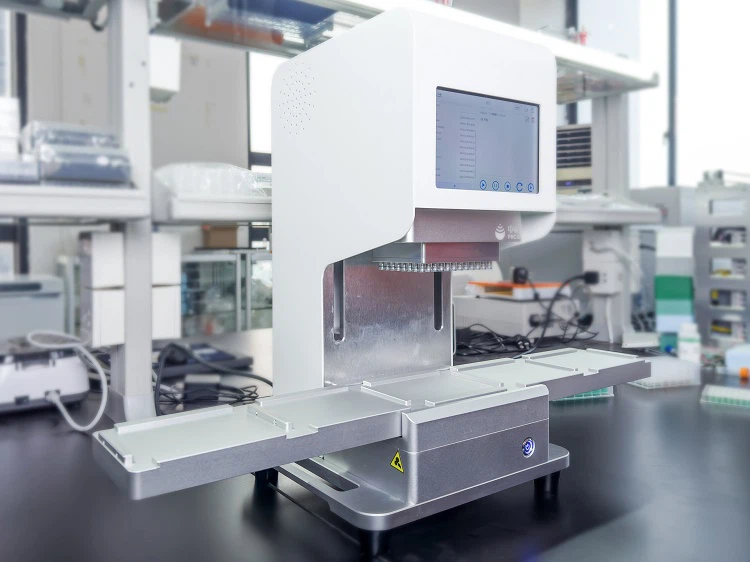
The 96 Microplate Pipetting Workstation is a fully automated liquid handling workstation. It can dispense up to 96 channels at once, which can help reduce errors and processing time when pipetting by hand. The machine's pipetting head, control interface, liquid handling core, deck, and pipette tips increase workflow.

Test For Coronavirus Workstation
Testing for coronavirus typically involves PCR or rapid antigen tests conducted in laboratories, clinics, or designated testing centers. PCR workstations are designed to protect against contamination during sensitive PCR amplification and manipulation of DNA or RNA. PCR cabinets and hoods are useful additions to the molecular biology and genomics lab.

96 Channel Semi Automatic Workstation
A 96-channel semi-automatic workstation is a liquid handling system that can pipette up to 96 samples simultaneously. They are designed for high and medium throughput workflows. They combine human labour with automated machinery to produce goods. In this system, some tasks are performed by human operators, while others are completed by machines.

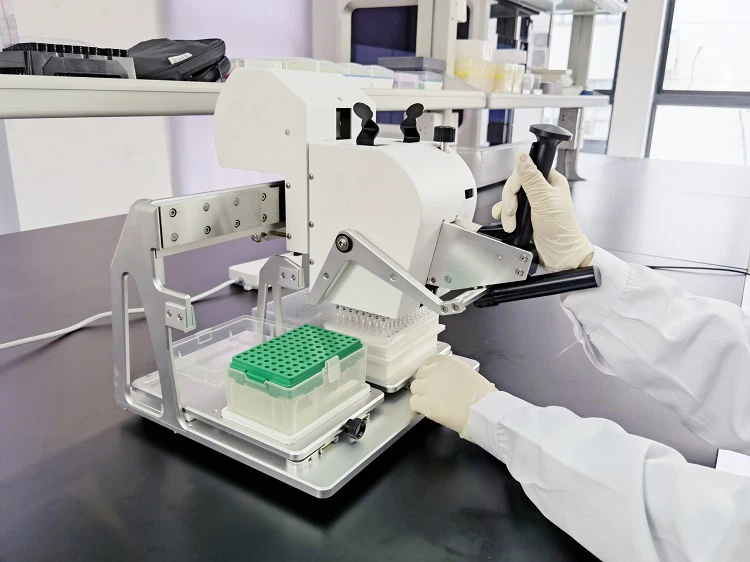
A manual high-throughput pipetting system is a device that helps life scientists streamline and speed up their well plate applications. Manual pipetting is often used in labs with low throughput levels. It can be a good choice for simple applications or low-volume pipetting, such as setting up experiments.
Cell Analysis Manual Workstation
PRCXI designed the 20μl and 200μl SC9000 to be fast, accurate and easy to use. It provides excellent accuracy and precision based on an understanding of how researchers work and how high throughput pipetting fits into the overall workflow of the lab, with a good ergonomic design and virtually no training required.
What is Liquid Handler Workstations?
In general, liquid handling means transferring liquids from one container to another. This can be done manually, semi-automatically (''hybrids''), or fully-automatically with automated liquid handling systems (ALH systems). Types of liquid handling systems include pipettes and micropipettes, both analog and electronic, with fixed and disposable tips, washers, microtiter plate reagent dispensers, stackers, handlers, burettes, software, reagents and consumables, and some other products. Liquid handling is an extremely important practice in all biotechnology and pharmaceutical industries, research institutes, hospital and diagnostic laboratories, academic institutions, and others. There are many applications for laboratories to use the systems – drug discovery, genomics, clinical diagnostics, proteomics, and many other fields.
Features of Liquid Handler Workstations
Multi Function
Our liquid handling systems are suitable for mid-throughput production with large dispensing areas and liquid dispensing volumes ranging from pL to µL for printing targets including MTPs, biosensors, slides, membranes and more.
Precise Positioning
These liquid system tables feature non-contact technology that allows droplets to be dispensed into small cavities for the most accurate positioning of dispense lines and drops on target. Get consistent and repeatable results by using programmed parameters and repositioning capabilities.
User Friendly
These workstations are equipped with a large number of friendly and powerful operating software, which provide a variety of preset pipetting modes and parameters, and can automatically calculate the optimal pipetting depth and angle or adjust the pipetting position (X/Z axis) as needed.
Quick Operation
These liquid handling stations provide 96-channel liquid handling, utilizing automated tip loading or unloading to achieve sealed pipetting between channels and increase speed.
Application of Liquid Handler Workstations
Life Science Laboratories
Liquid handling plays a pivotal role in life science laboratories. In experiments such as gene sequencing, protein crystallization, antibody testing, and drug screening, liquid biosamples frequently must be transferred between containers of varying sizes and/or dispensed onto substrates of varying types. The sample volumes are usually small, at the micro- or nanoliter level, and the number of transferred samples can be huge when investigating large-scope combinatorial conditions.
Modularity
Liquid handling robots can be customized using different add-on modules such as centrifuges, PCR machines, colony pickers, shaking modules, heating modules and others. Some liquid handling robots utilize Acoustic Liquid Handling (also known as acoustic droplet ejection or ADE) which uses sound to move liquids without the traditional pipette or syringe.
Quality Control
One of the challenges in using liquid handlers, or liquid handling robots, is in verifying the proper function of the device. Liquid handling operations, performed by these systems, can fail due to clogged pipette tips, failed solenoid valves, damaged labware, operator error and many other reasons. A variety of methods exist for performing quality control of liquid dispensing on automated platforms including gravimetric, fluorescent and colorimetric measurements. In addition to manual quality control methods, technologies have been developed which allow for the automated monitoring of quality control of liquid handling robots.
Benefits of Liquid Handler Workstations

Reduce Manual Tasks
Save your time and focus on efforts where your expertise offers most value. Liquid handling systems are designed to speed up the pipetting and dispensing process while at the same time increasing the accuracy of workflows for different liquid types and volumes. By using a liquid handler, you are relieved of the extreme stress of manual handling. You can relieve muscle tension and joint pain by not performing repetitive manual tasks.

Higher Throughput in Less Time
You can process up to 96 samples simultaneously with high speed compared to manual pipetting. You can also handle batches with many samples. Workflows are drastically streamlined, so that entire protocols can be run in less time. The semi automated system has the critical advantage that allows users to screen large compound libraries quickly and efficiently at a quick rate while saving substantial amount of costs and increasing the throughput.

Fast, Accurate & Precise
Errors are virtually eliminated. Among your pipetting benefits: improved consistency, better precision, and accuracy, topped off by less sample loss and reagent usage. The low dead volume, saves 10 times on reagents used. Manual pipetting can compromise data quality and lead to costly reruns due to errors.

Eliminate Carry-Over & Contamination
Avoiding cross-contamination during manual pipetting is essential for reliable results, but can be a tedious, time-consuming process. Automated liquid handling systems dramatically reduce the risk of cross-contamination. Our technology enables droplets to be dispensed into the target plate below the source plate and eliminates carryover and cross-contamination.
Types of Liquid Handler Workstations
Manual Liquid Handling Systems
Manual liquid handling technologies are still the basis in all the laboratories around the world, especially pipettes, due to their easy-to-use feature and range of applications – a wide variety of experimental processes and analysis in molecular biology, biotechnology, chemistry, etc. Therefore, the pipette market is expected to continue dominating the market.
Manual products are pipettes, which can be disposable (used for rough measurements only) or transferable, single- or multi-channel (most common configurations of channels are 4, 8, 12, and 98), and dispensers which allow dispensing specific volumes into multiple receptacles without aspiration in between. Drawbacks are the low throughput of samples involved, not that great reproducibility, high labor cost, and the chance of repetitive stress injuries.
However, over the years, manual liquid handling technologies have become more accurate, precise, safer, and more comfortable to use.
Semi-automated Liquid Handling Systems
Currently, some manufacturers are focusing on semi-automated (electronic or hybrid) systems to bring some level of automation to labs with limited budgets that don't permit start-to-finish automation. Such systems usually operate through push buttons, thus offering a higher level of easy-to-use and flexibility than manual pipettes. This type of system allows researchers to leverage novel systems and technologies alongside one another to automate specific parts of the workflow. These types of systems allow moderate throughput and higher reproducibility with less labor costs.
Automated Liquid Handling (ALH) Systems
An automated liquid handling system is a device that performs liquid transfers via computerized systems. One major part is software that enables users to perform different protocols on the system. These devices offer precision sample preparation for high-throughput sequencing or screening, liquid or powder weighting, bioassays of many kinds, etc. There may also be heating/cooling and shaking or centrifugal components built in (plate washer that uses centrifugal force to remove liquids from well plates contact-less).
Some are even physically constructed for easy integration with peripheral labware using robotic arms. Those are especially common in medium- and large-sized life science companies that perform a lot of R&D.
Factors to Consider When Choose Liquid Handler Workstations
The liquid handler-built to precisely move liquids from one vessel to another in applications ranging from nucleic-acid purification and DNA sequencing to high-throughput screening of pharmaceutical compounds-has become a powerful and popular tool in labs throughout the life-science industry. Although useful and sure to expedite almost any application, liquid handler can be quite costly, so consider the following before purchasing one.
Dispenser Type
There are three main choices for dispensers. First, there are peristaltic pumps, which can precisely dispense nanoliter volumes of liquid with very little priming necessary; these are self-priming. Second are microprocessor-controlled syringes, which, like peristaltic pumps, can dispense nanoliter volumes but with much more rapid output and higher precision. In general, syringe-operated dispensers require more priming than peristaltic pumps, but the amount of priming depends on the system. Finally, there are hybrid detection systems that combine both technologies in one unit; in addition to liquid handling, such systems perform washing functions.
Sample Volume and Flow Rate
After you decide on a type of dispenser, you should consider the volume range you require in a liquid handler. As with other considerations discussed in here, the appropriate volume range depends on your application. For example, applications performed in smaller culture vessels or assay plates (e.g., 384 wells) require a lower liquid-volume range than those performed in larger vessels or plates (e.g., six or 24 wells).
Another application-specific consideration is the liquid handler's flow-rate spectrum. Higher flow rates may be necessary for temporally sensitive enzymatic or cell-based assays. Slower flow rates may be necessary for chromatographic assays.
Special Considerations for PCR
If you plan to use your liquid handler to perform PCR-based assays, it is important to determine if the instrument contains a thermal-regulatory module that ensures temperature regulation in the heating blocks. Also, for PCR-based assays, make sure your liquid-handling workstation can protect your samples against cross contamination from previously amplified DNA templates.
Special Considerations for Immunoassays
If you plan to conduct immunoassays, make sure your liquid handler can accommodate magnetic or plastic bead-based assays. Specifically, ensure that your workstation is equipped with an appropriate magnet to attract the magnetic beads used in your assay.
Throughput
Finally, what throughput do you require for assays that will be performed using your liquid handler? A high-throughput instrument is definitely necessary for most pharmaceutical applications, including high-throughput screening (HTS), GPCR assays, pharmacokinetics, etc., as well as for DNA-sequencing applications. Clinical labs should consider purchasing a high-throughput liquid handler to accommodate the typically high volume of samples they process. Low- or medium-throughput instruments may be more appropriate for some chromatographic applications, such as certain protein purification steps.
Liquid handlers can be useful in many applications. Finding the right one for your research is simply a matter of considering these key criteria and matching them to your needs.
Blow-out Volume – Prior to aspiration of liquid, a small volume of air should be aspirated to be used later as a blow-out volume. This blow-out volume is important when trying to completely empty the pipette tip. Some liquid tends to linger in the tip and the blow-out volume provides an extra dispense to ensure the tip is fully emptied.
Reverse Pipetting – For some viscous liquids, the blow-out volume is not sufficient to completely empty the tip. In these cases reverse pipetting may be a preferable option. For reverse pipetting, there is no blow-out volume, instead excess liquid is picked up during aspiration. Then during the dispense step, the desired volume can be expelled precisely and the excess waste volume remains in the tip.
Transport Air Volume – After liquid is aspirated into the pipette tip, it is common to move the tip to a new location prior to dispense. This movement results in forces that affect the equilibrium of the liquid in the tip. One possible effect is a small drip forming on the pipette tip during transit. To mitigate this issue, pipettes can aspirate a "transport air volume" after the liquid is in the tip. This additional air prevents the droplet formation during transit.
Pre-Wetting the Tip – A wet tip behaves differently than a fresh, dry tip. This has to do with the surface tension between the liquid and the tip material as well as the saturation of the air in the tip. Pre-wetting the tip by repetitive aspiration and dispensing before drawing the desired aspiration volume can improve the accuracy for many liquids but is especially useful for viscous and volatile liquids.
Over Aspiration Volume – Pre-wetting the pipette tip can improve accuracy but it also increases the duration of the pipetting task. Over-aspirating a liquid and then immediately dispensing the additional liquid can have a similar effect to pre-wetting without considerably increasing pipetting time.
Optimize Swap Speed – After aspiration, it is possible that some liquid remains on the outside of the tip. The amount of that liquid can be influenced by the speed that the tip is removed from the liquid (swap speed). A slower speed can ensure that the liquid has time to drop off the tip into the reservoir. Minimizing liquid on the outside of the tip improves the accuracy of the subsequent dispense.
Settling Time – After aspirating a liquid, it is critical to wait for the liquid and the air in the tip to reach equilibrium prior to dispensing the liquid. An appropriate settling time is dependent on the volume and the properties of the liquid being aspirated.
Stop-Back Volume – When jet dispensing aliquots of liquid, it is critical to achieve a clean cut between the dispensed volume and the liquid retained in the tip. This is partially achieved with a high dispense velocity, but it can be further enhanced with a stop-back volume. After the plunger moves the desired distance to dispense the liquid, the motor is immediately reversed and the plunger aspirates to create a stop-back volume of air, resulting in a greater velocity change and a clean droplet.
Certificate Photo
Factory Photo



Frequently Asked Questions of Liquid Handler Workstations
Hot Tags: prcxi pipetting workstation, China prcxi pipetting workstation manufacturers, Single Pin Picking Workstations, Automated Pipetting Workstation, 96 Channel and 6 Plates Workstation, Liquid Handler Workstations, 1 To 384 Of Liquid Handling Workstation, 8 Channel and 12 Plates Workstation


